<?xml version="1.0" encoding="UTF-8"?>
<rss version="2.0"
	xmlns:content="http://purl.org/rss/1.0/modules/content/"
	xmlns:wfw="http://wellformedweb.org/CommentAPI/"
	xmlns:dc="http://purl.org/dc/elements/1.1/"
	xmlns:atom="http://www.w3.org/2005/Atom"
	xmlns:sy="http://purl.org/rss/1.0/modules/syndication/"
	xmlns:slash="http://purl.org/rss/1.0/modules/slash/"
	>

<channel>
	<title>STO by Six Month Smiles</title>
	<atom:link href="http://blog.6monthsmiles.com/?feed=rss2" rel="self" type="application/rss+xml" />
	<link>http://blog.6monthsmiles.com</link>
	<description>Just another WordPress weblog</description>
	<lastBuildDate>Wed, 01 Sep 2010 14:46:45 +0000</lastBuildDate>
	<generator>http://wordpress.org/?v=2.9.1</generator>
	<language>en</language>
	<sy:updatePeriod>hourly</sy:updatePeriod>
	<sy:updateFrequency>1</sy:updateFrequency>
			<item>
		<title>The “Sweet Spot” For Dentists And Patients</title>
		<link>http://blog.6monthsmiles.com/?p=185</link>
		<comments>http://blog.6monthsmiles.com/?p=185#comments</comments>
		<pubDate>Wed, 01 Sep 2010 14:27:58 +0000</pubDate>
		<dc:creator>6monthsmiles</dc:creator>
				<category><![CDATA[Marketing Information]]></category>

		<guid isPermaLink="false">http://blog.6monthsmiles.com/?p=185</guid>
		<description><![CDATA[by Ryan Swain, DMD
Early in my career I grasped on to a certain mindset that I have since learned was erroneous. I thought that I needed to convince each patient to proceed with the dental work that I believe they needed. I viewed case presentation as though I was the attorney and the patient was [...]]]></description>
			<content:encoded><![CDATA[<p><strong>by Ryan Swain, DMD</strong></p>
<p>Early in my career I grasped on to a certain mindset that I have since learned was erroneous. I thought that I needed to convince each patient to proceed with the dental work that I believe they needed. I viewed case presentation as though I was the attorney and the patient was the jury; my job was to win the case. I believed that if I won the case and convinced the patient, they would proceed with the treatment that I was recommending for them.</p>
<p>How many times have you presented a treatment plan and hoped that you showed the right photos and used the right verbal skills in order to get the patient to “say yes?” Some of us even create fancy PowerPoint presentations with spinning letters and flying photographs&#8230; all in an attempt to get the patient to “say yes” to our recommendations.</p>
<p>I had an epiphany a few years ago after I took my car to a local mechanic. I usually despise taking my car to a mechanic because it is hard for me to know if the recommendations that he gives me are trustworthy. I’m sure many of you feel the same way. You take your car in and they tell you things like, “You need a new transmission” or “Your brakes are shot and you need completely new brakes.” In my experience, most mechanics aren’t like dentists. They don’t take out a small camera and take pictures of the existing problems with the car. They don’t put together clever PowerPoint presentations to convince us that the problems really do exist. Most mechanics tell us what we “need” and stare blankly at us until we say something… but they are expecting us to submit to their “automotive authority” and proceed with their recommendations.</p>
<p>When I took my car to a local mechanic a few years ago, I had a different experience that really resonated with me. After diagnosing my car problems, this particular mechanic, whom I had never worked with before, came into the waiting room and told me what he thought was wrong with my car and explained his recommendations. But, he didn’t stare blankly at me after this. He said something bold and clear that has stuck with me.</p>
<p>He said, “Dr. Swain, I’m assuming that you want your car to run properly and function safely but you want to spend as little money as possible to accomplish those goals. Is that correct?” In awe I responded, “Yes, that’s right.” He continued, “Dr. Swain, you have my word that I will only make recommendations that will allow you to obtain your goals and I will always make my recommendations based on the knowledge that you want to spend your money wisely.” I was blown away by his simple and effective approach. I proceeded with his recommendations and he quickly earned my trust as the months went by. We reached “the sweet spot” where he could be honest with me and I could trust him as the automotive expert.</p>
<p>Through this experience I realized that my patients want the same thing from me… the ability to trust me as the expert. With the PowerPoint presentations and photos that I had been using to “convince” patients to say yes, I had essentially been trying to educate patients to the point where they became “the expert” and would agree that my recommendations were appropriate. Even with great patient education, patients still aren’t able to make an expert decision about whether or not they need an implant or a root canal. They come to us because we are the experts. When I take my car to the mechanic, I don’t want to be responsible for making the decisions because I don’t have enough knowledge of automobiles to make good decisions. I want to trust my mechanic and our patients want to trust us.</p>
<p>I’ve discovered that the best way to implement this idea is to be very candid with patients, just like the mechanic had been open and candid with me. We should tell patients that they can trust us because we have their best interests (and their wallets) in mind when we make our treatment recommendations. Some patients will never meet us in “the sweet spot” but many will. It is our responsibility to communicate to patients that they should trust us, and then it is our duty to make ethical and accurate recommendations.</p>
<p>This approach has saved me and my team a tremendous amount of time and it reduces stress for everyone &#8211; including the patient. We still understand the importance of patient education, but we use it as a tool to inform them about the treatment they will be receiving rather than as a tool to convince them to “say yes.” Ultimately, I realized that patients want to put their trust in the hands of a reliable expert and I needed to own that role. If you can grasp the attitude shift that I’m recommending, I hope that you too are able to move into “the sweet spot” with your patients.</p>
<p><em>Dr. Ryan Swain is a graduate of the University of Florida College of Dentistry. He practices in Rochester, NY and focuses on Short Term Ortho and other conservative cosmetic dental procedures. He is president and chief clinical instructor for Six Month Smiles. Dr. Swain is a pioneer in the field of Short Term Ortho and constantly on the forefront of GP orthodontics. He has trained dentists internationally and prides himself on de-mystifying orthodontics for GPs. </em></p>
]]></content:encoded>
			<wfw:commentRss>http://blog.6monthsmiles.com/?feed=rss2&amp;p=185</wfw:commentRss>
		<slash:comments>0</slash:comments>
		</item>
		<item>
		<title>Cosmetic Composites &#8211; Rewarding for Patients and Dentists</title>
		<link>http://blog.6monthsmiles.com/?p=178</link>
		<comments>http://blog.6monthsmiles.com/?p=178#comments</comments>
		<pubDate>Thu, 05 Aug 2010 16:14:01 +0000</pubDate>
		<dc:creator>6monthsmiles</dc:creator>
				<category><![CDATA[Clinical Information]]></category>

		<guid isPermaLink="false">http://blog.6monthsmiles.com/?p=178</guid>
		<description><![CDATA[By Dr. Ryan Swain
When we think about cosmetic dentistry, we usually think about procedures like porcelain veneers, short term ortho, deep bleaching and aligner treatment. These procedures can be highly effective and can yield a tremendous change for our patients. However, over the last few years I’ve continued to see how well-performed anterior cosmetic composites [...]]]></description>
			<content:encoded><![CDATA[<p><strong>By Dr. Ryan Swain</strong></p>
<p>When we think about cosmetic dentistry, we usually think about procedures like porcelain veneers, short term ortho, deep bleaching and aligner treatment. These procedures can be highly effective and can yield a tremendous change for our patients. However, over the last few years I’ve continued to see how well-performed anterior cosmetic composites can dramatically improve a smile and add to a dental practice.</p>
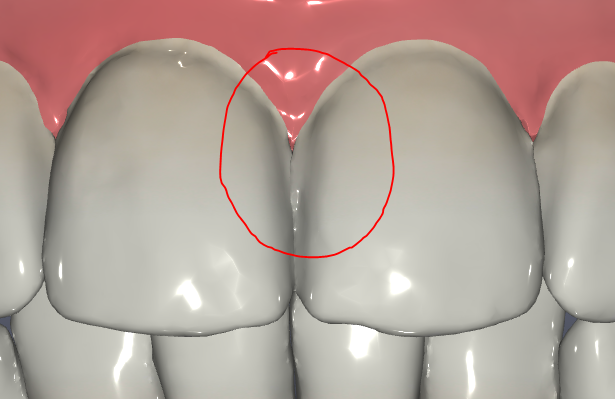
<p>Many of our patients have worn, chipped, ill-proportioned and asymmetrical anterior teeth. Furthermore, many smiles demonstrate other unattractive features such as black triangles (unfilled gingival embrasures), diastemas, fluorosis spots etc. Most of us are well aware that a nice looking smile must contain a certain amount of symmetry. All of the features I’ve listed here detract from the symmetry of a smile and cause the smile to look less appealing.</p>
<p>With some operator skill and the right knowledge/materials, we can greatly serve our patients by providing improvements in these areas with the use of composite resin. In my experience, in order to yield great results, a dentist must:</p>
<p><strong>1. Understand The Anatomy Of Anterior Teeth To A High Degree</strong><br />
When we are replacing missing tooth structure or adding dimension to misshapen teeth, it is vital that we can envision the desired result in our minds’ eyes. I’ve found that carefully studying models of teeth and perusing photos of teeth taken from various angles allows us to truly understand all of the anatomical characteristics of anterior teeth. This provides us with the ability to be intentional about what we are creating and to understand what is incorrect if something doesn’t look quite right.</p>
<p><strong>2. Bevel And Scallop Appropriately</strong><br />
Particularly for upper central incisors, it is important to bevel and scallop appropriately. This allows us to blend the composite in a way that will prevent a distinct line from showing at the margin. For instance, when doing a class 4 restoration on an upper incisor, the margin should be beveled so that the bevel is as long as the restoration will be. This provides for a long and smooth gradation in the thickness of composite. The bevel should also be scalloped so that there is not a distinct edge on the bevel. This further helps to create a smooth transition from tooth to composite.</p>
<p><strong>3. Use Bioclear Matrices For Diastema Closure And Black Triangle Closure</strong><br />
One of the best products to be released over the last few years is the Bioclear matrix from Bioclear. We all can finally throw our mylar strips out the window as Bioclear matrices provide for much more predictable, efficient and anatomically accurate composite restorations. The Bioclear matrices come in a variety of shapes and sizes and all of them are exquisitely crafted so that they match natural tooth anatomy. In my cosmetically focused practice I primarily use them to close diastemas, add width to teeth before short term ortho, and to close those unsightly black triangles that so many patients have. The shape of the Bioclear matrix allows us to accomplish these things in a controlled fashion. Bonding black triangles closed has traditionally been a nightmarish procedure that most dentists don’t even try to tackle. The Bioclear matrix system makes it simple.</p>
<p><strong>4. Use Interface™-The “Super Silane”</strong><br />
Interface is a product that has changed dentistry forever. It allows us to bond composite to porcelain in a predictable manner. Whether bonding an orthodontic bracket to a PFM or repairing a chipped veneer, Interface (by Apex Dental) is a lifesaver! Have you ever bonded a set of veneers only to have the patient chip one of them months later? Typically, that situation has been very challenging. Do we replace the veneer? Do we just leave it “as is?” A few drops of Interface and then some bonding adhesive allows for us to repair veneer chips, fractured bridges or broken crowns with composite. It truly is a fantastic product that every dental practice can benefit from.</p>
<p><strong>5. Work With A Composite That Has Good Blending Capabilities</strong><br />
I’ve used many composites that are difficult to work with. In my experience, some composites are just too transparent to be used for incisal edge repairs. If you’re like me, you don’t want to have to use five different shades and translucencies for one restoration. I prefer to use one or two different shades/translucencies per restoration. I also want to use a flowable composite that works in conjunction with the packable composite. For incisal edge repairs and diastema closures it is necessary to use a composite that blocks enough light. If the composite is too translucent, the area of the restoration will always have an inappropriate value and chroma.</p>
<p>Conservative and strategically placed cosmetic composites are not just a great service, but they can be a practice builder too. Whether it’s worn and “ditched out” incisal edges, black triangles due to periodontal disease or chipping from trauma, composite resin can yield fantastic results that patients see tremendous value in. In my practice, we offer what we call “the quick and easy smile rejuvenation.” We evaluate the smile and then use composite and cosmetic re-contouring to provide as much harmony to the smile as possible. Patients love this service because it is done in one visit, there is no anesthesia used and the results are immediate. This is dentistry that is tangibly rewarding for both patients and dentists.</p>
<p><em>Dr. Ryan Swain is a graduate of the University of Florida College of Dentistry. He practices in Rochester, NY and focuses on Short Term Ortho and other conservative cosmetic dental procedures. He is president and chief clinical instructor for Six Month Smiles. Dr. Swain is a pioneer in the field of Short Term Ortho and constantly on the forefront of GP orthodontics. He has trained dentists internationally and prides himself on de-mystifying orthodontics for GPs. </em></p>
]]></content:encoded>
			<wfw:commentRss>http://blog.6monthsmiles.com/?feed=rss2&amp;p=178</wfw:commentRss>
		<slash:comments>0</slash:comments>
		</item>
		<item>
		<title>Vote for Six Month Smiles!</title>
		<link>http://blog.6monthsmiles.com/?p=172</link>
		<comments>http://blog.6monthsmiles.com/?p=172#comments</comments>
		<pubDate>Thu, 29 Jul 2010 15:10:36 +0000</pubDate>
		<dc:creator>6monthsmiles</dc:creator>
				<category><![CDATA[Six Month Smiles]]></category>

		<guid isPermaLink="false">http://blog.6monthsmiles.com/?p=172</guid>
		<description><![CDATA[Calling all 6MS providers&#8230;.
The Dentaltown.com Townie Choice awards are happening NOW!
At Six Month Smiles, we&#8217;re working hard to continue to create visibility for
Six Month Smiles and the Townie Choice awards is a great way for us to
spread the word.
From the heart, I&#8217;m asking if you would please take just 2 minutes and
vote for Six Month [...]]]></description>
			<content:encoded><![CDATA[<p style="text-align: justify;">Calling all 6MS providers&#8230;.</p>
<p style="text-align: justify;">The Dentaltown.com Townie Choice awards are happening NOW!</p>
<p>At Six Month Smiles, we&#8217;re working hard to continue to create visibility for<br />
Six Month Smiles and the Townie Choice awards is a great way for us to<br />
spread the word.</p>
<p>From the heart, I&#8217;m asking if you would please take just 2 minutes and<br />
vote for Six Month Smiles in the orthodontic section.  We are listed<br />
under the seminars, brackets, wires, and lab sections.</p>
<p>Please take a minute and ROCK THE VOTE!  We would be very thankful.</p>
<p>To vote now<a href="http://www.towniecentral.com/Dentaltown/Survey.aspx " target="_blank"> <strong>CLICK HERE!</strong></a></p>
]]></content:encoded>
			<wfw:commentRss>http://blog.6monthsmiles.com/?feed=rss2&amp;p=172</wfw:commentRss>
		<slash:comments>0</slash:comments>
		</item>
		<item>
		<title>Dr. Swain&#8217;s Video Blog:  Flowable Rotation Bump.</title>
		<link>http://blog.6monthsmiles.com/?p=113</link>
		<comments>http://blog.6monthsmiles.com/?p=113#comments</comments>
		<pubDate>Tue, 29 Jun 2010 20:20:43 +0000</pubDate>
		<dc:creator>6monthsmiles</dc:creator>
				<category><![CDATA[Dr. Swain's Video Posts]]></category>

		<guid isPermaLink="false">http://blog.6monthsmiles.com/?p=113</guid>
		<description><![CDATA[]]></description>
			<content:encoded><![CDATA[<embed src="http://s0.videopress.com/player.swf?v=1.02" type="application/x-shockwave-flash" width="512" height="286" wmode="transparent" seamlesstabbing="true" allowfullscreen="true" allowscriptaccess="always" overstretch="true" flashvars="guid=0klpPI34&amp;site=wporg" title=""></embed>
]]></content:encoded>
			<wfw:commentRss>http://blog.6monthsmiles.com/?feed=rss2&amp;p=113</wfw:commentRss>
		<slash:comments>6</slash:comments>
		</item>
		<item>
		<title>Moving Beyond &#8220;Occlusion Confusion&#8221;</title>
		<link>http://blog.6monthsmiles.com/?p=136</link>
		<comments>http://blog.6monthsmiles.com/?p=136#comments</comments>
		<pubDate>Wed, 09 Jun 2010 13:50:20 +0000</pubDate>
		<dc:creator>6monthsmiles</dc:creator>
				<category><![CDATA[Clinical Information]]></category>

		<guid isPermaLink="false">http://blog.6monthsmiles.com/?p=136</guid>
		<description><![CDATA[By Dr. Ryan Swain
Over the last five years I’ve been on a pursuit to understand occlusion and simplify the topic in a new and insightful manner. As is oftentimes the case, taking a big step back and looking at this complicated subject in a simple and pragmatic fashion will allow us to see some basic [...]]]></description>
			<content:encoded><![CDATA[<p><strong>By Dr. Ryan Swain</strong></p>
<p>Over the last five years I’ve been on a pursuit to understand occlusion and simplify the topic in a new and insightful manner. As is oftentimes the case, taking a big step back and looking at this complicated subject in a simple and pragmatic fashion will allow us to see some basic truths that perhaps were previously hidden from us.</p>
<p>I’d like to start by stating <strong>two easily observable and scientifically proven facts about occlusion:</strong></p>
<ol>
<li>Teeth do not touch with any significant force during normal mastication</li>
<li>Canine guidance and protrusive guidance are never used during normal mastication</li>
</ol>
<p><a href="http://emailer.dtcommunicate.com/go2.shtml?sT0JumCYmKyLRsUI/a9ef2a2d639fe81e/a667b8bd30c57df9/Ryan@6monthsmiles.com"></a></p>
<p>When I state these ideas during my lectures, I can feel the skepticism in the room. It’s an interesting moment. Based on what I understand, many of the dentists are thinking <em>“those statements aren’t true”</em> and others are thinking <em>“I’ve never thought of that before.” </em>I pause for a few seconds and savor the awkward atmosphere before moving on to an effective little exercise. We pass out a hard piece of candy to all of the attendees and ask them to eat the candy. As the room fills with the sound of crunching candy, I ask the attendees to follow my instructions. <em>“Raise your hand when your teeth touch or when you are utilizing canine or protrusive guidances.”</em> In four years, I have never had a single attendee raise their hand.</p>
<p>Many studies over the years such as those by Gibbs and Lundeen have shown clearly that our teeth do not touch during the normal chewing process. But, unlike most scientific studies, we can very easily test these findings by observing what happens in our own mouths. I’m continually amazed at how few of us actually use our own personal chewing experiences to think critically about the topic of occlusion. In many ways, this is quite ironic. We are highly trained dental professionals; we analyze and repair teeth on a daily basis but many of us <strong>haven’t taken the time to consider how or when our own teeth, muscles and oral structures actually function. </strong>I encourage you to take my <em>“when do teeth touch?”</em> challenge the next time you enjoy a meal. You’ll notice that your muscles of mastication pull your mandible towards your maxilla so that your upper and lower teeth can pulverize the bolus of food. This pattern continues until the bolus is broken down to a certain point. At this point, when upper and lower teeth are just about to touch, you stop chewing and you swallow the bolus. As you swallow you may notice that there is some light tooth contact but what you should also notice is that the force with which this contact occurs is extremely light.</p>
<p><a href="http://emailer.dtcommunicate.com/go2.shtml?sT0JumCYmKyLRsUI/a85d85fa89d699da/a667b8bd30c57df9/Ryan@6monthsmiles.com"></a></p>
<p>If teeth do not touch during normal mastication, then it is important ask <em>“when do they touch?”</em> The answer is relatively simple. <strong>The only time that teeth touch with significant force is during parafunctional events.</strong> During these events, food is not present in the mouth. So, although teeth are primarily used to aid in our nourishment, they are essentially only damaged significantly through parafunction and trauma. When we understand this clearly, our treatment becomes more focused and effective.</p>
<p>Many dentists wonder why they can place a restoration in one patient’s mouth and it will endure for years while a similar restoration in a different patient’s mouth fails in just a few months. Dr. Frank Spear has described two categories of patients: <strong>high responders and low responders.</strong> High responders are the patients we see who seem to wear, crack and break anything that is placed in their mouths. These are also the patients who have extreme sensitivity to occlusal disharmonies that can be created when new restorations are placed. Low responders are the patients that rarely have dental problems and seem to adapt to just about any kind of dentistry that is performed in their mouths. What it boils down to is that the high responders are the only people who are actually putting their teeth together with any significant force. They are the clenchers and bruxers.</p>
<p>When we understand these relatively simple concepts we are able to cut through much of the fog that seems to hang around the area of occlusion and hone in on the most important aspects of <strong>helping our patients protect their teeth and restorations. </strong>Recognizing the signs associated with parafunction becomes a primary focus for us as clinicians. Educating the patients whom demonstrate these signs about their parafunctional habits becomes a significant part of our patient communication. Understanding the best methods and materials for parafunctional control also becomes imperative.</p>
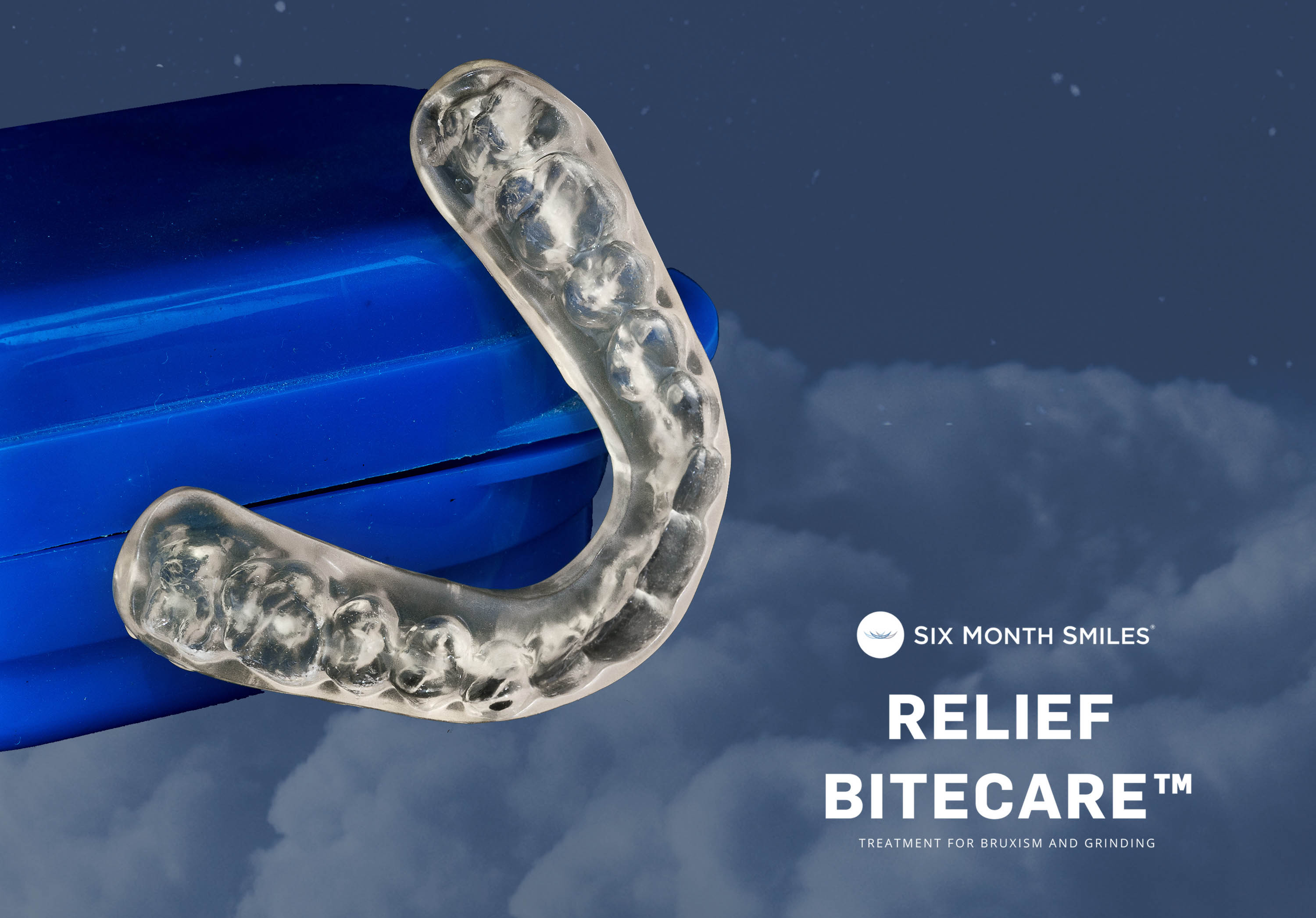
<p>There are many types of guards and splints that can be used to help soften the blow of bruxing events. My personal choice for effective parafunctional control is the NTI-TSS device. The NTI-TSS (Neuro-Trigeminal Inhibition Tension Suppression System) provides a <strong>remarkably effective and easy way for dentists to help their patients protect their teeth and joints.</strong> The NTI device is a small and robust guard that is usually made to be worn on the lower incisors. The NTI provides for incisor-only contact which minimizes maximum biting force and muscle activity by approximately 65%. When patients cannot contact with canines or posterior teeth in any excursive movements, the masseter and temporalis muscles can only fire with a minimal amount of force. This provides many benefits for our patients including muscle tension suppression and decreased load to the TMJ’s. Since there is no tooth-to-tooth contact while wearing the NTI, there is no opportunity for tooth abrasion to occur as the result of bruxism.</p>
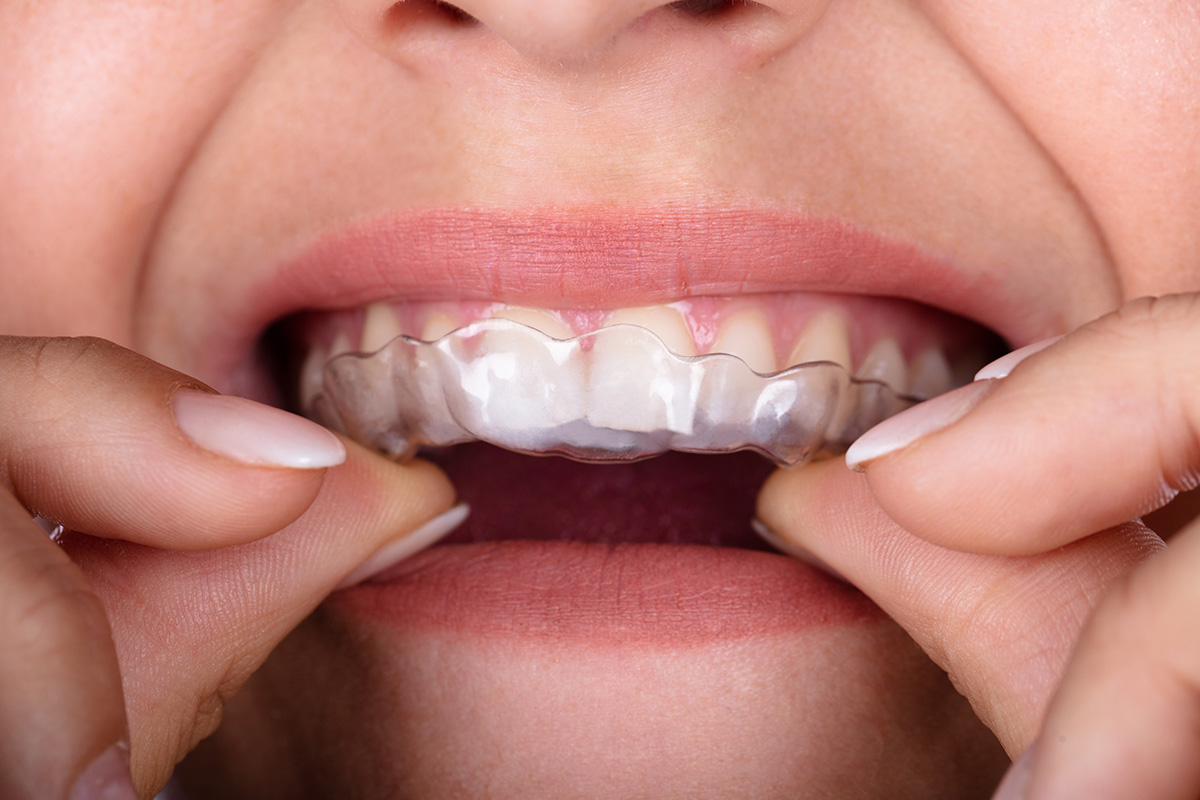
<p>Full arch nightguards have been fabricated and used successfully for many years. However, because of the size of a full arch splint, patient compliance is extremely poor. Additionally, adjusting a full arch splint can be quite cumbersome if any muscle relaxation and compensatory condylar seating occurs. Another negative characteristic of a full arch nightguard that many dentists haven’t considered is that a patient can still clench with 100% bite force while wearing even the most accurately adjusted full mouth orthotic.</p>
<p>The NTI can be easily fabricated chairside by a dental auxillary and adjustments are relatively easy because the incisors are the only teeth that come in contact with the guard. After making our NTI’s chairside for many years, we now submit these cases to Keller Laboratories for laboratory NTI-TSS fabrication. There is a slight increase in expense but the saved chairtime and increased quality in the finished device provide plenty of value for me, my staff and my patients.</p>
<p>I encourage you to consider some of the ideas that I have presented here. As dental professionals, <strong>our desire is to be experts in our field and use that expertise to benefit our patients.</strong> Occlusion poses an obstacle for many dentists because of the wide variety of opinions and conflicting evidence. I’m certain that if we take a step back and try to see the big picture, some of the topics within occlusion can become less complicated. If we stay focused on the science and also utilize our own experiences and pragmatism, we can move forward and progress beyond a state of “occlusion confusion.”</p>
<p><em>Dr. Ryan Swain is a graduate of the University of Florida College of Dentistry. He practices in Rochester, NY and focuses on Short Term Ortho and other conservative cosmetic dental procedures. He is president and chief clinical instructor for </em><a href="http://emailer.dtcommunicate.com/go2.shtml?sT0JumCYmKyLRsUI/6c05bc46d11add97/a667b8bd30c57df9/Ryan@6monthsmiles.com"><em>Six Month Smiles</em></a><em>. Dr. Swain is a pioneer in the field of Short Term Ortho and constantly on the forefront of GP orthodontics. He has trained dentists internationally and prides himself on de-mystifying orthodontics for GPs. </em></p>
]]></content:encoded>
			<wfw:commentRss>http://blog.6monthsmiles.com/?feed=rss2&amp;p=136</wfw:commentRss>
		<slash:comments>0</slash:comments>
		</item>
		<item>
		<title>Creating Value In A Recession &#8211; The Cosmetic Paradox:</title>
		<link>http://blog.6monthsmiles.com/?p=128</link>
		<comments>http://blog.6monthsmiles.com/?p=128#comments</comments>
		<pubDate>Tue, 11 May 2010 21:43:35 +0000</pubDate>
		<dc:creator>6monthsmiles</dc:creator>
				<category><![CDATA[Marketing Information]]></category>

		<guid isPermaLink="false">http://blog.6monthsmiles.com/?p=128</guid>
		<description><![CDATA[By Dr. Ryan Swain
“Value” is a word that we hear so often, I think many of us have lost sight of what it really means. Dictionary.com defines value as “worth, merit or importance.” Value is subjective. We all apply different amounts of value to different items. A great piece of sushi may be extremely valuable [...]]]></description>
			<content:encoded><![CDATA[<p><strong>By Dr. Ryan Swain</strong></p>
<p>“Value” is a word that we hear so often, I think many of us have lost sight of what it really means. Dictionary.com defines value as “worth, merit or importance.” Value is subjective. We all apply different amounts of value to different items. A great piece of sushi may be extremely valuable to me (a sushi lover) but essentially worthless to someone with a strong aversion to raw fish. During this recession, we as dentists and business owners must think hard about the amount of value that we are creating for our patients. We must also clearly understand what aspects of our practices provide the most value to our patients. Is it the convenient location of our office? Is it our ability to provide painless dentistry? Is it the quality of our dental restorations? To be successful, we need to create significant value for the people in our communities or we are destined for mediocrity or in the worst-case scenario, failure.</p>
<p>A recession is an interesting phenomenon. Billions of dollars of wealth literally disappears in a very short period of time. Although they can be very painful, recessions do a great job of separating the wheat from the chaff and exposing businesses that aren’t bringing sufficient value to their customers. When money becomes scarce, consumers start treating each dollar with more care and spending their money with more scrutiny. Whether we like it or not, our job as business owners is to provide products and services that are worth more to our patients than the money they have in their pockets. When we do this, they will decide to give us some of their money in exchange for our services. Garrett Gunderson, author of Killing Sacred Cows, sums this up by saying “We only give up something in an exchange when we value what we’re receiving more than we value what we’re giving up.” It sounds simple, right? Let’s investigate this a bit further.</p>
<p>Why is it that during this recession, some practices continue to thrive while other practices are hurting badly? Why do some dentists increase their marketing budgets during the recession while others make cuts? It all boils down to value creation. The dentists that continue to provide services and experiences that are truly valuable to their patients will always have cash flowing into their practices. These dentists realize that when times are tough and consumers are clinging more tightly to their dollars, an increase in marketing will help convince more people to come into their offices for dental services. However, an increase in marketing will only yield results if there are aspects of the practice that are truly marketable. In other words, we must have something valuable to market to our patients!</p>
<p>The common myth is that cosmetic dentistry should be “put on the backburner” during a recession. The misconception is that cosmetic dentistry is “elective” and therefore is not something that people will purchase when money is tight. This brings us back to our concept of value creation. What do you think is more valuable to a patient &#8211; having a crown placed on their cracked but asymptomatic second molar or having the unsightly diastema closed between their upper centrals? Which will provide a more tangible result for the patient? Which procedure will help improve self-confidence and self-esteem and therefore create a significant amount of value for the patient?</p>
<p>The unavoidable truth is that most people care a lot more about their appearance than they do about their health. This is especially true when it comes to dental health. As dental professionals, we understand how important dental health is but sometimes the most frustrating part for us is trying to convince our patients to feel the same way. The trend towards insurance-based practices is a symptom of the discrepancy between the consumers’ perceived value of restorative dental work and the costs that are associated with these services. Many practices simply aren’t able to convince enough patients to spend the fruits of their labor (their money) on dental services, and therefore these practices opt to participate with insurance plans. When participating with an insurance plan, a practice can generate more patients and no longer has to work as hard to create value for the patients. Value for these patients exists because the dental office participates with their plan and they don’t have to spend as much of their own money in exchange for the dental services provided. Since they are spending less of their own money they don’t require as much value during the exchange.</p>
<p>Don’t get me wrong. I am neither praising nor denigrating dental practices that participate with insurance companies. There is nothing wrong with dental insurance participation and for many dentists it is a smart move. I’m highlighting the idea that there are various ways that dentists can appeal to patients and when times are tough it doesn’t have to be by signing up for more insurance plans.</p>
<p>We have to fully understand what patients want, and then provide it. In my office I’ve seen that affordable cosmetic dentistry can be an enormous boon to a practice. There is tremendous value in conservative dentistry that dramatically improves the smiles of our patients. Sure, those big $30,000 porcelain cases become rarer during a recession, but more practical forms of cosmetic dentistry can be very attractive to patients. Many dentists that I speak with on a weekly basis are actually growing their practices by ensuring that they are offering services that patients will say yes to and then creating the exposure needed to make patients aware of these services (both internally and externally). Many of these services are conservative cosmetic procedures such as: botox and dermal fillers ( www.FacialEsthetics.org), strategic cosmetic bonding (www.BioclearMatrix.com), short term orthodontics (www.6MonthSmiles.com), teeth whitening (www.KorWhitening.com) and ‘minimal prep’ veneers such as Cristal veneers from Aurum Laboratories.</p>
<p>Along with great restorative dentistry it is important to have a vast service mix available to our patients. The products and procedures I’ve mentioned here can all be added to a practice with minimal amounts of time and money, but with significant return on investment. Allow me to conclude by stating very clearly what my “take home” message is. Businesses succeed in any economic environment when they continue to create value for their customers. As dentists, we must be honest about what our patients want and be willing to cater to them on their terms. We are highly trained dental professionals and we must be able to diagnose and treat dental disease at a high level. But, as business owners we should also recognize that it is our responsibility to understand our customers and cater to them. We must create value for our patients.</p>
<p><em>Dr. Ryan Swain is a graduate of the University of Florida College of Dentistry. He practices in Rochester, NY and focuses on Short Term Ortho and other conservative cosmetic dental procedures. He is president and chief clinical instructor for Six Month Smiles. Dr. Swain is a pioneer in the field of Short Term Ortho and constantly on the forefront of GP orthodontics. He has trained dentists internationally and prides himself on de-mystifying orthodontics for GPs. </em></p>
]]></content:encoded>
			<wfw:commentRss>http://blog.6monthsmiles.com/?feed=rss2&amp;p=128</wfw:commentRss>
		<slash:comments>0</slash:comments>
		</item>
		<item>
		<title>The Importance of Gingival Symmetry:</title>
		<link>http://blog.6monthsmiles.com/?p=107</link>
		<comments>http://blog.6monthsmiles.com/?p=107#comments</comments>
		<pubDate>Thu, 22 Apr 2010 20:29:04 +0000</pubDate>
		<dc:creator>6monthsmiles</dc:creator>
				<category><![CDATA[Clinical Information]]></category>

		<guid isPermaLink="false">http://blog.6monthsmiles.com/?p=107</guid>
		<description><![CDATA[By Dr. Ryan Swain
Most of us realize that symmetry is the core element of beauty. The most beautiful people have symmetrical facial features and bone structure that is essentially balanced. These are the people we see in magazines, movies and TV advertisements. A certain amount of symmetry must be present in order for something to [...]]]></description>
			<content:encoded><![CDATA[<p><strong>By Dr. Ryan Swain</strong></p>
<p>Most of us realize that symmetry is the core element of beauty. The most beautiful people have symmetrical facial features and bone structure that is essentially balanced. These are the people we see in magazines, movies and TV advertisements. A certain amount of symmetry must be present in order for something to be perceived as aesthetically pleasing.</p>
<p>This concept of symmetry is at the heart of cosmetic dentistry.  Foundationally, cosmetic dentistry is all about increasing symmetry. Teeth whitening is an attempt to create symmetry and balance between the color of the teeth and the whites of the eyeballs. Teeth appear unhealthy and unattractive when the hue of the teeth does not balance with the whites of the eyes. Porcelain veneers can dramatically improve the appearance of a smile. Tooth color and texture can be optimized and the proportions of the teeth can be idealized. Additionally, veneers can mask tooth wear and minor tooth-position discrepancies. There is one particular dental discrepancy that has traditionally been a major challenge for dentists. It is also a discrepancy that, if not rectified, can prevent a smile from having the symmetry that is required for it to be a true cosmetic success. The discrepancy I’m referring to is uneven maxillary gingival heights.</p>
<p>Most dentists understand that ideally, we want to have the gingival zeniths of the upper central incisors at the same height as each other. The gingival heights of the upper lateral incisors should be about 1mm coronally positioned relative to the centrals. Finally, the maxillary canines should have a height that is essentially the same as the centrals. This configuration is aesthetically pleasing and the cornerstone of an attractive smile. Of course, some patients do not show their gingival margins when smiling. For these patients, the location of the gingival margins is not paramount. But patients that do not show their gingival margins upon smiling are relatively rare.</p>
<p>Uneven gingival margins pose a problem to most dentists because most dentists have very little control over their positions. Some enhancements can be made via periodontal surgery or tissue trimming but the amount of tissue change that can be accomplished is relatively minimal. Ultimately, these gingival margin discrepancies can be traced back to malpositioned teeth. The gingival attachment forms at a specific relationship to the CEJ of a particular tooth. Therefore, when the teeth within an arch are not level and straight, the gingival margins will almost always be in disharmony.</p>
<p>As mentioned earlier, porcelain veneers can improve aspects of the smile and hide some minor tooth position discrepancies, but very little can be done to balance the gingival margins when treating patients with porcelain veneers. It is not uncommon for a dentist to deftly create great veneer preparations and receive fantastic ceramic work back from their lab only to find that once cemented, the patient isn’t thrilled with the final veneer result. Oftentimes the patient can’t quite pinpoint the specific aspect of the smile that is displeasing to them. They will say things like “I’m not sure but something just doesn’t look right” or “They look nice and white but I’m just not happy with the overall appearance.” More often than not, the patient is noticing the lack of gingival symmetry and simply isn’t conscious of it. They see something that bothers them but they can’t describe what it is.</p>
<p>Ultimately, being a good dentist includes the ability to recognize what symmetrical discrepancies exist and also knowing how to correct them. In the words of Dr. Frank Spear, “Figure out where you want the teeth and then figure out how to get them there.” Herein lies the problem for most dentists. Most dentists don’t have the ability to move teeth other than the slight position changes that can be made with a restorative treatment plan. Furthermore, since the large majority of adult patients are unwilling to undergo traditional orthodontic treatment, a referral to an orthodontist is not accepted by most adult patients. This creates a situation where dentists are trying to provide great cosmetic dentistry for their patients but with little or no control over the all-important gingival heights.</p>
<p>Fortunately, many GPs have learned how to provide some orthodontic movement using clear aligners. Aligners have been a real asset for general dentists as they have provided us with a tool that can be used to address tooth-position problems. This also gives us some control over the gingival levels. However, aligners have limitations. It is quite difficult to extrude and rotate teeth with aligners and this can be quite frustrating for dentists and patients alike. Furthermore, the high lab fees associated with aligner treatment limits the number of patients who can accept treatment and also limits the payment options that dentists can provide for their patients.</p>
<p>The Six Month Smiles Short Term Ortho system ( www.6MonthSmiles.com) has emerged as a fantastic solution for general dentists. Short Term Ortho involves the use of tooth-colored brackets and wires to level and align the teeth in an average of just six months. The orthodontic scope is more limited than that of traditional comprehensive orthodontics. The treatment goals of Short Term Ortho are very similar to those associated with aligner therapy. However, brackets and wires provide for much more controlled and efficient tooth movement. This gives us the ability to provide the needed changes in symmetry over a very reasonable amount of time. Most gingival level discrepancies can be easily corrected in just three months. This can make our cosmetic and restorative dentistry much more predictable and ultimately the end result is more aesthetically pleasing.</p>
<p>Most dentists want to provide great services for their patients. Cosmetic dentistry, when performed correctly, can be a life-enhancing service. A cosmetic dentist must be able to recognize and diagnose discrepancies in symmetry. Furthermore, a great cosmetic dentist also has tools at their disposal with which they can correct the problems. Gingival margin discrepancies have traditionally posed an unsolvable problem for clinicians. But, like most problems, it can be solved with ample knowledge, effective materials and a systemized approach.</p>
<p><em>Dr. Ryan Swain is a graduate of the University of Florida College of Dentistry. He practices in Rochester, NY and focuses on Short Term Ortho and other conservative cosmetic dental procedures. He is president and chief clinical instructor for Six Month Smiles. Dr. Swain is a pioneer in the field of Short Term Ortho and constantly on the forefront of GP orthodontics. He has trained dentists internationally and prides himself on de-mystifying orthodontics for GPs. </em></p>
]]></content:encoded>
			<wfw:commentRss>http://blog.6monthsmiles.com/?feed=rss2&amp;p=107</wfw:commentRss>
		<slash:comments>0</slash:comments>
		</item>
		<item>
		<title>Top 10 Reasons to add Six Month Smiles to your practice!</title>
		<link>http://blog.6monthsmiles.com/?p=98</link>
		<comments>http://blog.6monthsmiles.com/?p=98#comments</comments>
		<pubDate>Wed, 31 Mar 2010 20:57:02 +0000</pubDate>
		<dc:creator>6monthsmiles</dc:creator>
				<category><![CDATA[Six Month Smiles]]></category>

		<guid isPermaLink="false">http://blog.6monthsmiles.com/?p=98</guid>
		<description><![CDATA[ 
By Dr. Kent Smith
 
10. Gives assistants something they can &#8220;own&#8221;. Giving them this added
responsibility creates an &#8220;owner&#8221; of your practice, which we all want.
&#8212;&#8212;&#8212;&#8212;&#8212;&#8212;&#8212;&#8212;&#8212;&#8212;&#8212;&#8212;&#8212;&#8212;&#8212;&#8212;&#8212;&#8212;&#8212;&#8212;&#8212;&#8212;&#8212;&#8212;&#8212;&#8212;&#8212;&#8212;&#8212;&#8212;&#8212;&#8212;
9. In this economy, many want an inexpensive option for looking good
that does not involve porcelain. Why not offer them what they are seeking?
&#8212;&#8212;&#8212;&#8212;&#8212;&#8212;&#8212;&#8212;&#8212;&#8212;&#8212;&#8212;&#8212;&#8212;&#8212;&#8212;&#8212;&#8212;&#8212;&#8212;&#8212;&#8212;&#8212;&#8212;&#8212;&#8212;&#8212;&#8212;&#8212;&#8212;&#8212;&#8212;
8. Bending wires is for lab guys, [...]]]></description>
			<content:encoded><![CDATA[<p><strong> </strong></p>
<p><strong>By Dr. Kent Smith</strong></p>
<p><strong> </strong></p>
<p><strong>10.</strong> Gives assistants something they can &#8220;own&#8221;. Giving them this added<br />
responsibility creates an &#8220;owner&#8221; of your practice, which we all want.<br />
&#8212;&#8212;&#8212;&#8212;&#8212;&#8212;&#8212;&#8212;&#8212;&#8212;&#8212;&#8212;&#8212;&#8212;&#8212;&#8212;&#8212;&#8212;&#8212;&#8212;&#8212;&#8212;&#8212;&#8212;&#8212;&#8212;&#8212;&#8212;&#8212;&#8212;&#8212;&#8212;</p>
<p><strong>9.</strong> In this economy, many want an inexpensive option for looking good<br />
that does not involve porcelain. Why not offer them what they are seeking?<br />
&#8212;&#8212;&#8212;&#8212;&#8212;&#8212;&#8212;&#8212;&#8212;&#8212;&#8212;&#8212;&#8212;&#8212;&#8212;&#8212;&#8212;&#8212;&#8212;&#8212;&#8212;&#8212;&#8212;&#8212;&#8212;&#8212;&#8212;&#8212;&#8212;&#8212;&#8212;&#8212;<br />
<strong>8.</strong> Bending wires is for lab guys, not dentists.<br />
&#8212;&#8212;&#8212;&#8212;&#8212;&#8212;&#8212;&#8212;&#8212;&#8212;&#8212;&#8212;&#8212;&#8212;&#8212;&#8212;&#8212;&#8212;&#8212;&#8212;&#8212;&#8212;&#8212;&#8212;&#8212;&#8212;&#8212;&#8212;&#8212;&#8212;&#8212;&#8212;<br />
<strong>7.</strong> Patients are looking for jobs. Not only do they want to spend<br />
less, they don&#8217;t want to look like a teenager with metal on their incisors.<br />
&#8212;&#8212;&#8212;&#8212;&#8212;&#8212;&#8212;&#8212;&#8212;&#8212;&#8212;&#8212;&#8212;&#8212;&#8212;&#8212;&#8212;&#8212;&#8212;&#8212;&#8212;&#8212;&#8212;&#8212;&#8212;&#8212;&#8212;&#8212;&#8212;&#8212;&#8212;&#8212;<br />
<strong>6.</strong> Patients have weddings, reunions and prom parties. They can&#8217;t do<br />
the 2-year braces thing. (Even had a spine surgeon in today who<br />
wanted hers off to run a marathon &#8211; no sweat)<br />
&#8212;&#8212;&#8212;&#8212;&#8212;&#8212;&#8212;&#8212;&#8212;&#8212;&#8212;&#8212;&#8212;&#8212;&#8212;&#8212;&#8212;&#8212;&#8212;&#8212;&#8212;&#8212;&#8212;&#8212;&#8212;&#8212;&#8212;&#8212;&#8212;&#8212;&#8212;&#8212;<br />
<strong>5.</strong> Invisalign  &#8211; need I say more?<br />
&#8212;&#8212;&#8212;&#8212;&#8212;&#8212;&#8212;&#8212;&#8212;&#8212;&#8212;&#8212;&#8212;&#8212;&#8212;&#8212;&#8212;&#8212;&#8212;&#8212;&#8212;&#8212;&#8212;&#8212;&#8212;&#8212;&#8212;&#8212;&#8212;&#8212;&#8212;&#8212;<br />
<strong>4.</strong> Speaking of plastic &#8211; it doesn&#8217;t rotate cuspids or extrude ANYTHING.<br />
&#8212;&#8212;&#8212;&#8212;&#8212;&#8212;&#8212;&#8212;&#8212;&#8212;&#8212;&#8212;&#8212;&#8212;&#8212;&#8212;&#8212;&#8212;&#8212;&#8212;&#8212;&#8212;&#8212;&#8212;&#8212;&#8212;&#8212;&#8212;&#8212;&#8212;&#8212;&#8212;<strong><br />
3.</strong> In this economy, you need to be adding to your service mix.<br />
&#8212;&#8212;&#8212;&#8212;&#8212;&#8212;&#8212;&#8212;&#8212;&#8212;&#8212;&#8212;&#8212;&#8212;&#8212;&#8212;&#8212;&#8212;&#8212;&#8212;&#8212;&#8212;&#8212;&#8212;&#8212;&#8212;&#8212;&#8212;&#8212;&#8212;&#8212;&#8212;<strong><br />
2.</strong> Adds production with very little overhead ($300K net increase in my<br />
office from 6MS last year &#8211; your results may vary)<br />
&#8212;&#8212;&#8212;&#8212;&#8212;&#8212;&#8212;&#8212;&#8212;&#8212;&#8212;&#8212;&#8212;&#8212;&#8212;&#8212;&#8212;&#8212;&#8212;&#8212;&#8212;&#8212;&#8212;&#8212;&#8212;&#8212;&#8212;&#8212;&#8212;&#8212;&#8212;&#8212;<br />
<strong>And the #1 reason</strong> to add Six Month Smiles to your practice today &#8230; use<br />
promo code SPRING2ACTION before April 17<sup>th</sup> and your first staff member<br />
attends any 2010 <a href="http://www.6monthsmiles.com/seminars/seminar_schedule.aspx" target="_blank">Six Month Smiles Two Day Seminar</a> for free!</p>
<p><em>Dr. Smith launched 21st Century Dental during the 20th century, so Six  Month Smiles feeds his passion for futuristic thinking.  He practices in  Irving (Dallas) Texas with a team of 22, where they live their mission:  &#8220;Vision, Experience, Compassion&#8230;.Expect Everything&#8221;.  They were the  first dental office in the U.S. to win the Consumers Choice Award for  Business Excellence in 2008, repeating this honor in 2009.</em></p>
<p><em>Although  working in a multi-layered practice, Dr. Smith’s passions lie in  orthodontics and sleep disordered breathing, speaking worldwide on these  topics for many years, and being named a Top 10 VIP by the Speaking  Consulting Network for 2009.</em></p>
<p><em>He also lectures on web site  marketing, and uses that knowledge to attract new patients searching for  Six Month Smiles. His site alone brings in 30 to 35 new patients every  month.  An Invisalign Premier Provider, Kent now has three chairside  assistants trained in the Six Month Smiles techniques to handle the  patient flow. If you do not get a chance to hear his strategy for  implementing Six Month Smiles, maybe it&#8217;s not your year for growth.   Don&#8217;t say we didn&#8217;t warn you!  Dr. Smith is a general dentist.</em></p>
]]></content:encoded>
			<wfw:commentRss>http://blog.6monthsmiles.com/?feed=rss2&amp;p=98</wfw:commentRss>
		<slash:comments>0</slash:comments>
		</item>
		<item>
		<title>Dr. Swain&#8217;s Video Blog:  Quick-Tie Trick!</title>
		<link>http://blog.6monthsmiles.com/?p=30</link>
		<comments>http://blog.6monthsmiles.com/?p=30#comments</comments>
		<pubDate>Tue, 30 Mar 2010 13:57:47 +0000</pubDate>
		<dc:creator>6monthsmiles</dc:creator>
				<category><![CDATA[Dr. Swain's Video Posts]]></category>

		<guid isPermaLink="false">http://blog.6monthsmiles.com/?p=30</guid>
		<description><![CDATA[]]></description>
			<content:encoded><![CDATA[<embed src="http://s0.videopress.com/player.swf?v=1.02" type="application/x-shockwave-flash" width="512" height="286" wmode="transparent" seamlesstabbing="true" allowfullscreen="true" allowscriptaccess="always" overstretch="true" flashvars="guid=Ftvfk2gd&amp;site=wporg" title=""></embed>
]]></content:encoded>
			<wfw:commentRss>http://blog.6monthsmiles.com/?feed=rss2&amp;p=30</wfw:commentRss>
		<slash:comments>12</slash:comments>
		</item>
		<item>
		<title>Self-Awareness Is King:</title>
		<link>http://blog.6monthsmiles.com/?p=80</link>
		<comments>http://blog.6monthsmiles.com/?p=80#comments</comments>
		<pubDate>Tue, 30 Mar 2010 13:42:44 +0000</pubDate>
		<dc:creator>6monthsmiles</dc:creator>
				<category><![CDATA[Leadership]]></category>

		<guid isPermaLink="false">http://blog.6monthsmiles.com/?p=80</guid>
		<description><![CDATA[By Dr. Ryan Swain
Do you know  yourself? Think about it for a minute. Do   you really know yourself? I’m a relatively young dentist but  there is one  thing I’ve learned early in my career that has paid  enormous dividends for me  in both my personal and my professional [...]]]></description>
			<content:encoded><![CDATA[<p><strong>By Dr. Ryan Swain</strong></p>
<p>Do you know  yourself? Think about it for a minute. <strong>Do   you really know yourself? </strong>I’m a relatively young dentist but  there is one  thing I’ve learned early in my career that has paid  enormous dividends for me  in both my personal and my professional life.  I’ve learned that <strong>self-awareness is king. </strong>Everyone  thinks  that they are self-aware. By this I mean that when asked, almost  everyone would  say that they believe that they know themselves. In my  experience, this is far  from the truth. Most people live their lives  without gaining a true  understanding of who they are and how they are  perceived by others. It’s a  strange phenomenon and I’m convinced that  it is the single biggest  characteristic that holds dentists (and all  people) back from reaching their  full potentials.</p>
<p>Anyone who is  truly excellent at something usually has a way in  which they obtain valuable  feedback about their performance.  Professional athletes have coaches that  scrutinize their technique and  provide insight regarding how they can improve.  Baseball players, for  example, spend hours watching video footage with their  coaches so they  can recognize their flaws and discuss options for improvement.  Golfers  spend countless hours perfecting their games by analyzing each minute   aspect of their swing and getting feedback from coaches. Ultimately, <strong>continual  improvement and excellence only  comes from honest investigation </strong>and  a choice to work toward improvement  through intentional and gradual  changes.</p>
<p>I think most  people would agree with my sentiments here. However,  very few dentists actually  apply these ideas to their own lives and  this prevents personal growth. Pride,  fear and laziness seem to blind  us and prevent us from being honest with  ourselves about who we truly  are and how we are perceived by those around us.  It’s much easier to  ignore our own character flaws and focus on the flaws of  others.  Personal change can be quite challenging and therefore many of us don’t   even crack that door open. We deflect criticism and make excuses for  the way  that we are. It’s a common pattern of behavior but there is  tremendous freedom  and success available for the few who can break the  cycle.</p>
<p>Socrates once  poignantly said, <em>“The uninspected life is  not  worth living.”</em> This idea really resonates with me. I believe we all   want to reach our potential and be the best people we can be… the best   dentists, spouses, fathers, employers, mothers, friends etc. This  can’t happen  unless we truly open ourselves up to scrutiny and  criticism. We can only  improve aspects of who we are <strong>if we   clearly understand the areas that need improvement. </strong></p>
<p>Let’s apply  this idea more specifically to our roles as dentists.  Most of us work very hard  to become excellent in our clinical skills.  We take many hours of CE and we  spend a lot of time trying to figure  out what tools, supplies and pieces of  technology will help us to be  clinically excellent. However, most of us realize  that <strong>clinical  ability is a very small  part of what makes a successful and respected  dentist/employer.</strong> Our  patients and our employees are much more  affected by our ability to: listen, be  compassionate, lead with  strength, show integrity, be humble, and respect those  around us.</p>
<p>Some dentists  are at their wits end, trying to figure out why their  careers aren’t as  successful as they’d like them to be. They are  looking for a magic formula that  will allow them to reach the success  that they hope for. They ask questions  such as <em>“Do I need to learn a  new  procedure?” </em>or<em> “Am I missing a vital  piece of technology  in the office?”</em> or <em>“Should  I switch to a different type of  composite material?”</em> Unfortunately, this  way of thinking leads  directly into a brick wall. It’s a dead end. Success and  personal  fulfillment doesn’t come in a simple formula.  Happiness isn’t created  by purchasing the  right equipment or even hiring the right staff. It  begins by taking an honest  look in the mirror and performing a sincere  inspection of the person looking  back at us.</p>
<p>Ask yourself,  how much time do you spend working on <em>YOU</em>?<strong> </strong>Do you even have a clear picture of  how others would describe  you? Do you wonder why you have a hard time retaining  staff and  getting good case acceptance from your patients? Do you find yourself   blaming your mediocrity on “the economy” or the “more aggressive”  dentists in  your area? These are tell-tale signs of a person <strong>who  is not self-aware.</strong> I’m imploring you to be honest with  yourself  and consider for one moment that maybe you fit into this  category.</p>
<p>Running is  easier than changing. If you are someone who is running,  I’m inviting you to  stop. You can achieve tremendous personal and  professional fulfillment if you  do. Here is <strong><em>“The Swain  Plan” </em></strong>for getting out of the rut and getting on the  road  to self-awareness and ultimately a better life/career.</p>
<ol>
<li>Write down what you believe are the  three weakest areas of your  character.</li>
<li>Ask those around you (spouse,  children, employees, friends) if  they agree with your list (if you have a hard  time sharing this list  with others, this confirms your predicament).</li>
<li>Make the following phrase a regular part of your dialogue with  others &#8211; <strong>how can I be better? </strong>If we continually  ask  this question and honestly seek the answers, we can make a huge step   towards growth.</li>
</ol>
<p>Imagine the  amount of useful feedback you can get when asking a  simple question such as <em>“How can I be better for you?” </em><strong>This  phrase is simple but extremely potent.</strong> Use it regularly with  your patients and your employees and be open to the  responses you  receive. Your life will change will because of it… ask me how, I  know!</p>
<p><em>Dr. Ryan Swain is a  graduate of the University of Florida  College of Dentistry. He practices  in Rochester, NY and focuses on  Short Term Ortho and other conservative  cosmetic dental procedures. He  is president and chief clinical instructor  for </em><em><a href="http://www.6monthsmiles.com/" target="_blank">Six Month Smiles</a>.   Dr. Swain is a pioneer in the field of Short Term  Ortho and  constantly on the forefront of GP orthodontics. He has trained  dentists  internationally and prides himself on de-mystifying orthodontics for   GPs.<br />
</em></p>
]]></content:encoded>
			<wfw:commentRss>http://blog.6monthsmiles.com/?feed=rss2&amp;p=80</wfw:commentRss>
		<slash:comments>0</slash:comments>
		</item>
	</channel>
</rss>