STO by Six Month Smiles

Archive for the ‘Clinical Information’ Category

Cosmetic Composites – Rewarding for Patients and Dentists

Posted August 5th, 2010 by 6monthsmiles under Clinical Information

By Dr. Ryan Swain

When we think about cosmetic dentistry, we usually think about procedures like porcelain veneers, short term ortho, deep bleaching and aligner treatment. These procedures can be highly effective and can yield a tremendous change for our patients. However, over the last few years I’ve continued to see how well-performed anterior cosmetic composites can dramatically improve a smile and add to a dental practice.

Many of our patients have worn, chipped, ill-proportioned and asymmetrical anterior teeth. Furthermore, many smiles demonstrate other unattractive features such as black triangles (unfilled gingival embrasures), diastemas, fluorosis spots etc. Most of us are well aware that a nice looking smile must contain a certain amount of symmetry. All of the features I’ve listed here detract from the symmetry of a smile and cause the smile to look less appealing.

With some operator skill and the right knowledge/materials, we can greatly serve our patients by providing improvements in these areas with the use of composite resin. In my experience, in order to yield great results, a dentist must:

1. Understand The Anatomy Of Anterior Teeth To A High Degree
When we are replacing missing tooth structure or adding dimension to misshapen teeth, it is vital that we can envision the desired result in our minds’ eyes. I’ve found that carefully studying models of teeth and perusing photos of teeth taken from various angles allows us to truly understand all of the anatomical characteristics of anterior teeth. This provides us with the ability to be intentional about what we are creating and to understand what is incorrect if something doesn’t look quite right.

2. Bevel And Scallop Appropriately
Particularly for upper central incisors, it is important to bevel and scallop appropriately. This allows us to blend the composite in a way that will prevent a distinct line from showing at the margin. For instance, when doing a class 4 restoration on an upper incisor, the margin should be beveled so that the bevel is as long as the restoration will be. This provides for a long and smooth gradation in the thickness of composite. The bevel should also be scalloped so that there is not a distinct edge on the bevel. This further helps to create a smooth transition from tooth to composite.

3. Use Bioclear Matrices For Diastema Closure And Black Triangle Closure
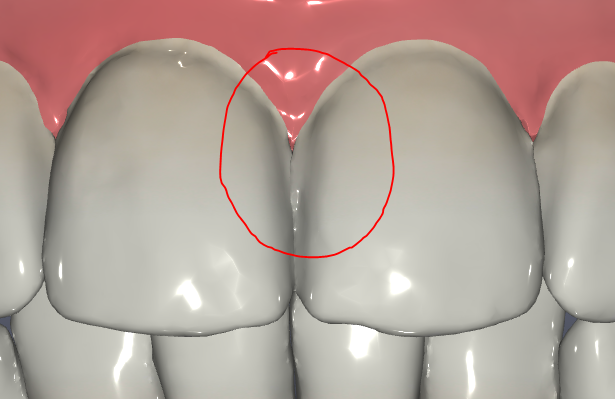
One of the best products to be released over the last few years is the Bioclear matrix from Bioclear. We all can finally throw our mylar strips out the window as Bioclear matrices provide for much more predictable, efficient and anatomically accurate composite restorations. The Bioclear matrices come in a variety of shapes and sizes and all of them are exquisitely crafted so that they match natural tooth anatomy. In my cosmetically focused practice I primarily use them to close diastemas, add width to teeth before short term ortho, and to close those unsightly black triangles that so many patients have. The shape of the Bioclear matrix allows us to accomplish these things in a controlled fashion. Bonding black triangles closed has traditionally been a nightmarish procedure that most dentists don’t even try to tackle. The Bioclear matrix system makes it simple.

4. Use Interface™-The “Super Silane”
Interface is a product that has changed dentistry forever. It allows us to bond composite to porcelain in a predictable manner. Whether bonding an orthodontic bracket to a PFM or repairing a chipped veneer, Interface (by Apex Dental) is a lifesaver! Have you ever bonded a set of veneers only to have the patient chip one of them months later? Typically, that situation has been very challenging. Do we replace the veneer? Do we just leave it “as is?” A few drops of Interface and then some bonding adhesive allows for us to repair veneer chips, fractured bridges or broken crowns with composite. It truly is a fantastic product that every dental practice can benefit from.

5. Work With A Composite That Has Good Blending Capabilities
I’ve used many composites that are difficult to work with. In my experience, some composites are just too transparent to be used for incisal edge repairs. If you’re like me, you don’t want to have to use five different shades and translucencies for one restoration. I prefer to use one or two different shades/translucencies per restoration. I also want to use a flowable composite that works in conjunction with the packable composite. For incisal edge repairs and diastema closures it is necessary to use a composite that blocks enough light. If the composite is too translucent, the area of the restoration will always have an inappropriate value and chroma.

Conservative and strategically placed cosmetic composites are not just a great service, but they can be a practice builder too. Whether it’s worn and “ditched out” incisal edges, black triangles due to periodontal disease or chipping from trauma, composite resin can yield fantastic results that patients see tremendous value in. In my practice, we offer what we call “the quick and easy smile rejuvenation.” We evaluate the smile and then use composite and cosmetic re-contouring to provide as much harmony to the smile as possible. Patients love this service because it is done in one visit, there is no anesthesia used and the results are immediate. This is dentistry that is tangibly rewarding for both patients and dentists.

Dr. Ryan Swain is a graduate of the University of Florida College of Dentistry. He practices in Rochester, NY and focuses on Short Term Ortho and other conservative cosmetic dental procedures. He is president and chief clinical instructor for Six Month Smiles. Dr. Swain is a pioneer in the field of Short Term Ortho and constantly on the forefront of GP orthodontics. He has trained dentists internationally and prides himself on de-mystifying orthodontics for GPs.

View/Post Comment

Moving Beyond “Occlusion Confusion”

Posted June 9th, 2010 by 6monthsmiles under Clinical Information

By Dr. Ryan Swain

Over the last five years I’ve been on a pursuit to understand occlusion and simplify the topic in a new and insightful manner. As is oftentimes the case, taking a big step back and looking at this complicated subject in a simple and pragmatic fashion will allow us to see some basic truths that perhaps were previously hidden from us.

I’d like to start by stating two easily observable and scientifically proven facts about occlusion:

  1. Teeth do not touch with any significant force during normal mastication
  2. Canine guidance and protrusive guidance are never used during normal mastication

When I state these ideas during my lectures, I can feel the skepticism in the room. It’s an interesting moment. Based on what I understand, many of the dentists are thinking “those statements aren’t true” and others are thinking “I’ve never thought of that before.” I pause for a few seconds and savor the awkward atmosphere before moving on to an effective little exercise. We pass out a hard piece of candy to all of the attendees and ask them to eat the candy. As the room fills with the sound of crunching candy, I ask the attendees to follow my instructions. “Raise your hand when your teeth touch or when you are utilizing canine or protrusive guidances.” In four years, I have never had a single attendee raise their hand.

Many studies over the years such as those by Gibbs and Lundeen have shown clearly that our teeth do not touch during the normal chewing process. But, unlike most scientific studies, we can very easily test these findings by observing what happens in our own mouths. I’m continually amazed at how few of us actually use our own personal chewing experiences to think critically about the topic of occlusion. In many ways, this is quite ironic. We are highly trained dental professionals; we analyze and repair teeth on a daily basis but many of us haven’t taken the time to consider how or when our own teeth, muscles and oral structures actually function. I encourage you to take my “when do teeth touch?” challenge the next time you enjoy a meal. You’ll notice that your muscles of mastication pull your mandible towards your maxilla so that your upper and lower teeth can pulverize the bolus of food. This pattern continues until the bolus is broken down to a certain point. At this point, when upper and lower teeth are just about to touch, you stop chewing and you swallow the bolus. As you swallow you may notice that there is some light tooth contact but what you should also notice is that the force with which this contact occurs is extremely light.

If teeth do not touch during normal mastication, then it is important ask “when do they touch?” The answer is relatively simple. The only time that teeth touch with significant force is during parafunctional events. During these events, food is not present in the mouth. So, although teeth are primarily used to aid in our nourishment, they are essentially only damaged significantly through parafunction and trauma. When we understand this clearly, our treatment becomes more focused and effective.

Many dentists wonder why they can place a restoration in one patient’s mouth and it will endure for years while a similar restoration in a different patient’s mouth fails in just a few months. Dr. Frank Spear has described two categories of patients: high responders and low responders. High responders are the patients we see who seem to wear, crack and break anything that is placed in their mouths. These are also the patients who have extreme sensitivity to occlusal disharmonies that can be created when new restorations are placed. Low responders are the patients that rarely have dental problems and seem to adapt to just about any kind of dentistry that is performed in their mouths. What it boils down to is that the high responders are the only people who are actually putting their teeth together with any significant force. They are the clenchers and bruxers.

When we understand these relatively simple concepts we are able to cut through much of the fog that seems to hang around the area of occlusion and hone in on the most important aspects of helping our patients protect their teeth and restorations. Recognizing the signs associated with parafunction becomes a primary focus for us as clinicians. Educating the patients whom demonstrate these signs about their parafunctional habits becomes a significant part of our patient communication. Understanding the best methods and materials for parafunctional control also becomes imperative.

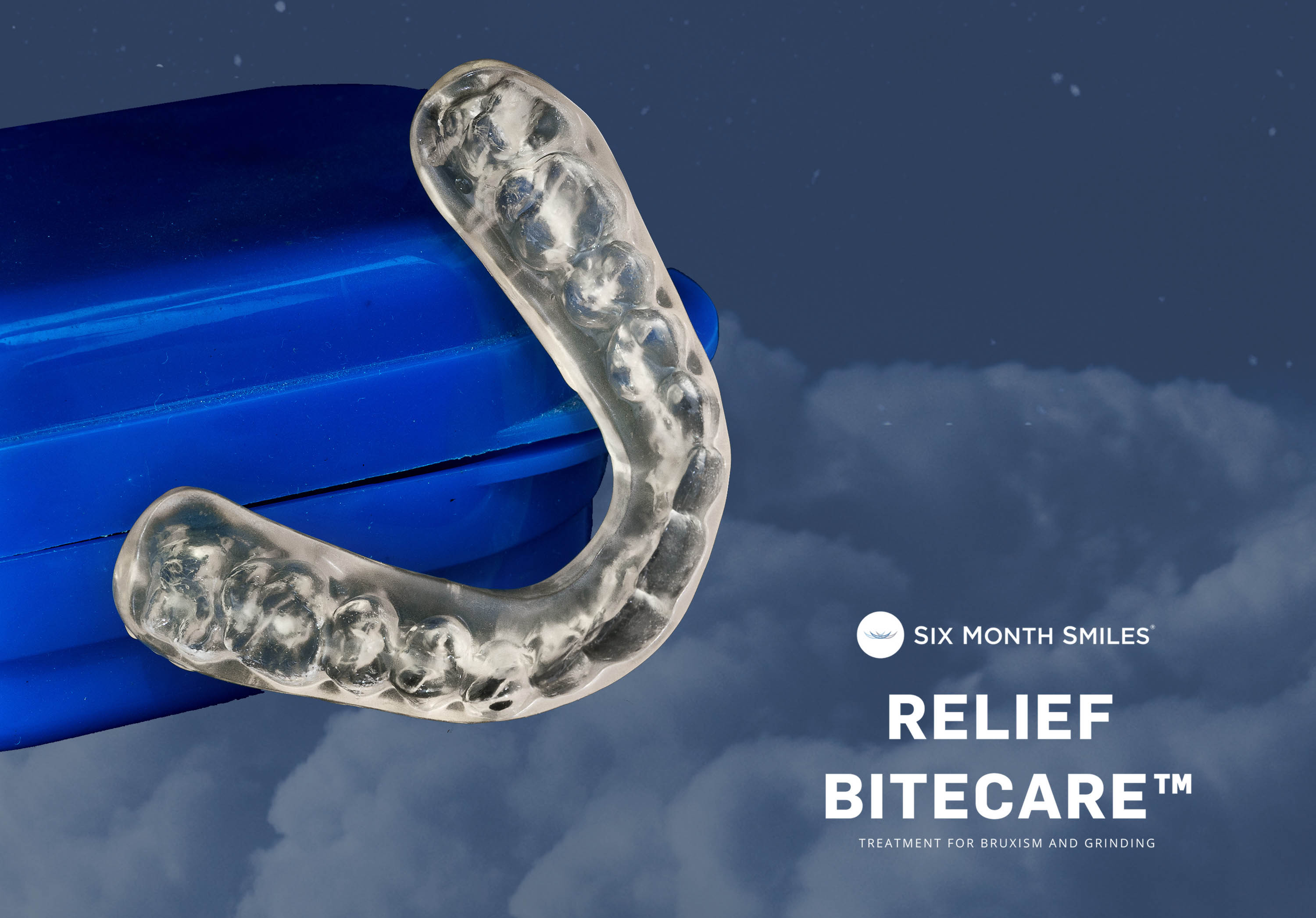
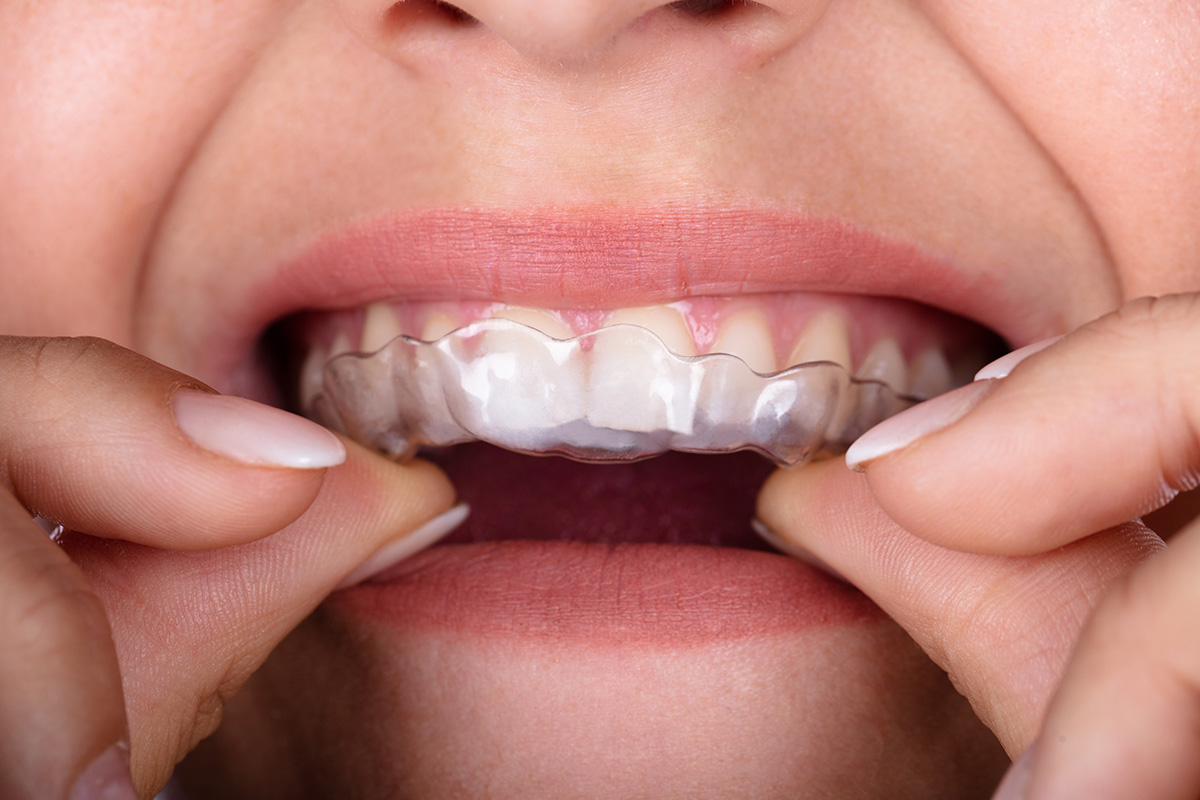
There are many types of guards and splints that can be used to help soften the blow of bruxing events. My personal choice for effective parafunctional control is the NTI-TSS device. The NTI-TSS (Neuro-Trigeminal Inhibition Tension Suppression System) provides a remarkably effective and easy way for dentists to help their patients protect their teeth and joints. The NTI device is a small and robust guard that is usually made to be worn on the lower incisors. The NTI provides for incisor-only contact which minimizes maximum biting force and muscle activity by approximately 65%. When patients cannot contact with canines or posterior teeth in any excursive movements, the masseter and temporalis muscles can only fire with a minimal amount of force. This provides many benefits for our patients including muscle tension suppression and decreased load to the TMJ’s. Since there is no tooth-to-tooth contact while wearing the NTI, there is no opportunity for tooth abrasion to occur as the result of bruxism.

Full arch nightguards have been fabricated and used successfully for many years. However, because of the size of a full arch splint, patient compliance is extremely poor. Additionally, adjusting a full arch splint can be quite cumbersome if any muscle relaxation and compensatory condylar seating occurs. Another negative characteristic of a full arch nightguard that many dentists haven’t considered is that a patient can still clench with 100% bite force while wearing even the most accurately adjusted full mouth orthotic.

The NTI can be easily fabricated chairside by a dental auxillary and adjustments are relatively easy because the incisors are the only teeth that come in contact with the guard. After making our NTI’s chairside for many years, we now submit these cases to Keller Laboratories for laboratory NTI-TSS fabrication. There is a slight increase in expense but the saved chairtime and increased quality in the finished device provide plenty of value for me, my staff and my patients.

I encourage you to consider some of the ideas that I have presented here. As dental professionals, our desire is to be experts in our field and use that expertise to benefit our patients. Occlusion poses an obstacle for many dentists because of the wide variety of opinions and conflicting evidence. I’m certain that if we take a step back and try to see the big picture, some of the topics within occlusion can become less complicated. If we stay focused on the science and also utilize our own experiences and pragmatism, we can move forward and progress beyond a state of “occlusion confusion.”

Dr. Ryan Swain is a graduate of the University of Florida College of Dentistry. He practices in Rochester, NY and focuses on Short Term Ortho and other conservative cosmetic dental procedures. He is president and chief clinical instructor for Six Month Smiles. Dr. Swain is a pioneer in the field of Short Term Ortho and constantly on the forefront of GP orthodontics. He has trained dentists internationally and prides himself on de-mystifying orthodontics for GPs.

View/Post Comment

The Importance of Gingival Symmetry:

Posted April 22nd, 2010 by 6monthsmiles under Clinical Information

By Dr. Ryan Swain

Most of us realize that symmetry is the core element of beauty. The most beautiful people have symmetrical facial features and bone structure that is essentially balanced. These are the people we see in magazines, movies and TV advertisements. A certain amount of symmetry must be present in order for something to be perceived as aesthetically pleasing.

This concept of symmetry is at the heart of cosmetic dentistry.  Foundationally, cosmetic dentistry is all about increasing symmetry. Teeth whitening is an attempt to create symmetry and balance between the color of the teeth and the whites of the eyeballs. Teeth appear unhealthy and unattractive when the hue of the teeth does not balance with the whites of the eyes. Porcelain veneers can dramatically improve the appearance of a smile. Tooth color and texture can be optimized and the proportions of the teeth can be idealized. Additionally, veneers can mask tooth wear and minor tooth-position discrepancies. There is one particular dental discrepancy that has traditionally been a major challenge for dentists. It is also a discrepancy that, if not rectified, can prevent a smile from having the symmetry that is required for it to be a true cosmetic success. The discrepancy I’m referring to is uneven maxillary gingival heights.

Most dentists understand that ideally, we want to have the gingival zeniths of the upper central incisors at the same height as each other. The gingival heights of the upper lateral incisors should be about 1mm coronally positioned relative to the centrals. Finally, the maxillary canines should have a height that is essentially the same as the centrals. This configuration is aesthetically pleasing and the cornerstone of an attractive smile. Of course, some patients do not show their gingival margins when smiling. For these patients, the location of the gingival margins is not paramount. But patients that do not show their gingival margins upon smiling are relatively rare.

Uneven gingival margins pose a problem to most dentists because most dentists have very little control over their positions. Some enhancements can be made via periodontal surgery or tissue trimming but the amount of tissue change that can be accomplished is relatively minimal. Ultimately, these gingival margin discrepancies can be traced back to malpositioned teeth. The gingival attachment forms at a specific relationship to the CEJ of a particular tooth. Therefore, when the teeth within an arch are not level and straight, the gingival margins will almost always be in disharmony.

As mentioned earlier, porcelain veneers can improve aspects of the smile and hide some minor tooth position discrepancies, but very little can be done to balance the gingival margins when treating patients with porcelain veneers. It is not uncommon for a dentist to deftly create great veneer preparations and receive fantastic ceramic work back from their lab only to find that once cemented, the patient isn’t thrilled with the final veneer result. Oftentimes the patient can’t quite pinpoint the specific aspect of the smile that is displeasing to them. They will say things like “I’m not sure but something just doesn’t look right” or “They look nice and white but I’m just not happy with the overall appearance.” More often than not, the patient is noticing the lack of gingival symmetry and simply isn’t conscious of it. They see something that bothers them but they can’t describe what it is.

Ultimately, being a good dentist includes the ability to recognize what symmetrical discrepancies exist and also knowing how to correct them. In the words of Dr. Frank Spear, “Figure out where you want the teeth and then figure out how to get them there.” Herein lies the problem for most dentists. Most dentists don’t have the ability to move teeth other than the slight position changes that can be made with a restorative treatment plan. Furthermore, since the large majority of adult patients are unwilling to undergo traditional orthodontic treatment, a referral to an orthodontist is not accepted by most adult patients. This creates a situation where dentists are trying to provide great cosmetic dentistry for their patients but with little or no control over the all-important gingival heights.

Fortunately, many GPs have learned how to provide some orthodontic movement using clear aligners. Aligners have been a real asset for general dentists as they have provided us with a tool that can be used to address tooth-position problems. This also gives us some control over the gingival levels. However, aligners have limitations. It is quite difficult to extrude and rotate teeth with aligners and this can be quite frustrating for dentists and patients alike. Furthermore, the high lab fees associated with aligner treatment limits the number of patients who can accept treatment and also limits the payment options that dentists can provide for their patients.

The Six Month Smiles Short Term Ortho system ( www.6MonthSmiles.com) has emerged as a fantastic solution for general dentists. Short Term Ortho involves the use of tooth-colored brackets and wires to level and align the teeth in an average of just six months. The orthodontic scope is more limited than that of traditional comprehensive orthodontics. The treatment goals of Short Term Ortho are very similar to those associated with aligner therapy. However, brackets and wires provide for much more controlled and efficient tooth movement. This gives us the ability to provide the needed changes in symmetry over a very reasonable amount of time. Most gingival level discrepancies can be easily corrected in just three months. This can make our cosmetic and restorative dentistry much more predictable and ultimately the end result is more aesthetically pleasing.

Most dentists want to provide great services for their patients. Cosmetic dentistry, when performed correctly, can be a life-enhancing service. A cosmetic dentist must be able to recognize and diagnose discrepancies in symmetry. Furthermore, a great cosmetic dentist also has tools at their disposal with which they can correct the problems. Gingival margin discrepancies have traditionally posed an unsolvable problem for clinicians. But, like most problems, it can be solved with ample knowledge, effective materials and a systemized approach.

Dr. Ryan Swain is a graduate of the University of Florida College of Dentistry. He practices in Rochester, NY and focuses on Short Term Ortho and other conservative cosmetic dental procedures. He is president and chief clinical instructor for Six Month Smiles. Dr. Swain is a pioneer in the field of Short Term Ortho and constantly on the forefront of GP orthodontics. He has trained dentists internationally and prides himself on de-mystifying orthodontics for GPs.

View/Post Comment

Traditional Orthodontics vs. Short-Term Orthodontics

Posted March 3rd, 2010 by 6monthsmiles under Clinical Information

By Dr. Louis Malcmacher

Orthodontists and orthodontic purists will certainly insist upon every tooth having to be in exactly its proper place and rotation at the close of orthodontic treatment.  In the past few years, there has certainly been a movement toward a simpler orthodontic solution for those patients (mostly adults) who just want to have straighter teeth, and an improvement in occlusion, without having full-blown orthodontic treatment stretching over a 2- to 3-year period.  When there are functional and complicated aesthetic problems, I don’t think that any dentist or specialist will argue that traditional orthodontics is what is needed/best suited to the patient’s needs.

When you have adults who have had orthodontic relapse, or who are looking for a simple solution that will not take a lot of time or cost a lot of money, should they be denied treatment simply because they do not want to have traditional orthodontic therapy that can be expensive and time consuming?  Is it wrong to provide a service to patients when they want a quicker and easier aesthetic result that will fit into the parameters of treatment?  Or, should we force the full orthodontic option down their throats, telling them this is really for their best interest in the long run?  With situations just like this, it has always been my opinion that these techniques are here to stay.  In addition, these are services that are desired by our patients so their usage will increase in the future.  We should seriously consider providing the proper education to dentists so that they can learn how to properly do these cases, instead of ending up with the horror cases we occasionally see and then throwing all of these procedures to the wayside.

Dr. Louis Malcmacher is a practicing general and cosmetic dentist in Bay Village, Ohio. An evaluator for Clinician’s Reports, Dr. Malcmacher has served as a spokesman for the AGD and is a consultant to the Council on Dental Practice of the American Dental Association.   He works closely with dental manufacturers as a clinical researcher in developing new products and techniques.  He is an internationally known lecturer, author, and dental consultant known for his comprehensive and entertaining style. He can be reached at (440) 892-1810 or via email at
dryowza@mail.com. For more information about his lecture schedule, BOTOX and dermal filler training courses, audio CDs, downloads of his resource list, and to sign up for a free monthly enewsletter, visit his Web site at commonsensedentistry.com.

View/Post Comment
Call Us! 886-957-7645